





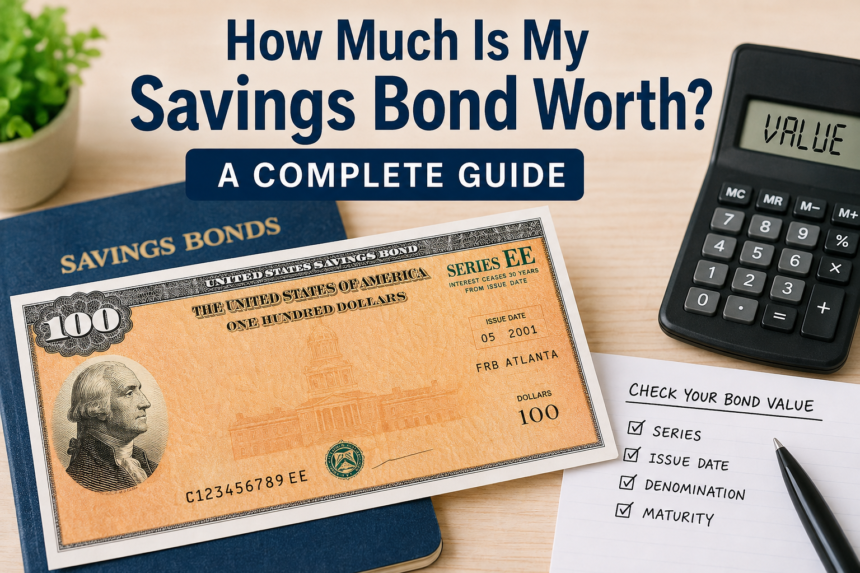
How Much Is My Savings Bond Worth? A Complete Guide to Checking Your Bond’s Value
Have you ever found an old savings bond and wondered, “How much is my savings bond worth?” Whether you received a bond as a gift, inherited one from a family member, or purchased one years ago and forgot about it, you may be surprised to learn that it could be worth more than the amount printed on the bond.
The current value of a U.S. savings bond depends on several factors, including its series, issue date, denomination, interest rate, and maturity date. Some bonds can earn interest for decades, while others may have already reached final maturity and stopped earning interest.
In this guide, we’ll explain how to check the value of a savings bond, how Series EE and Series I bonds work, what happens when a bond matures, and what you should know before cashing one
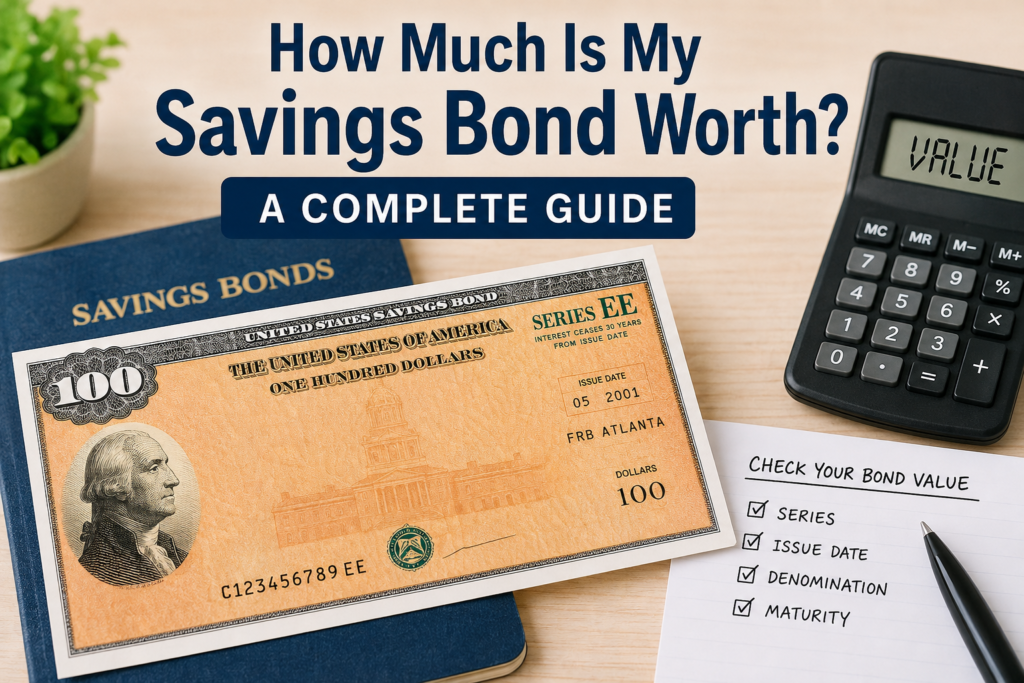
How Much Is My Savings Bond Worth?
There is no single answer because every savings bond can have a different value.
The amount printed on an older paper savings bond does not necessarily represent its current redemption value. A bond may have accumulated interest since it was purchased, which can increase its value.
To determine how much your savings bond is worth, you will generally need to know:
- The bond series
- The issue date
- The denomination
- How long you have owned it
- Whether it has reached final maturity
For eligible paper savings bonds, the U.S. Treasury provides a Savings Bond Calculator that can help determine the current value.
If you have an electronic savings bond, you may be able to view its value through your TreasuryDirect account.
What Is a U.S. Savings Bond?
A U.S. savings bond is a government-backed savings security issued by the U.S. Department of the Treasury.
Savings bonds are designed for long-term saving. Instead of receiving regular interest payments directly, interest generally accumulates and increases the bond’s value.
The two types of savings bonds currently issued by the U.S. Treasury are:
- Series EE Savings Bonds
- Series I Savings Bonds
There are also older savings bonds from discontinued series. These older bonds can have different interest and maturity rules, so it is important to identify the exact series before estimating their value.
What Determines the Value of a Savings Bond?
Several factors can affect the current value of your savings bond.
1. Bond Series
The series is one of the first things you should identify.
Modern savings bonds are generally Series EE or Series I, but older bonds can belong to historical series such as Series E, H, or HH.
Each series has its own rules for earning interest and reaching maturity.
2. Issue Date
The issue date is extremely important when calculating a savings bond’s value.
Interest rates and Treasury rules have changed over the years. Two bonds with the same denomination can therefore have different values if they were issued at different times.
3. Denomination
The denomination is the dollar amount associated with the bond.
Older paper savings bonds can have denominations such as $25, $50, $100, $500, $1,000, and higher amounts.
However, the denomination alone does not tell you the current value.
4. Accumulated Interest
Savings bonds can earn interest over time.
If you have held a bond for many years, it may have accumulated substantial interest.
This is why an old savings bond can be worth more than the amount originally paid for it.
5. Maturity Date
Savings bonds do not earn interest forever.
Many common savings bonds earn interest for up to 30 years. Once a bond reaches final maturity, it generally stops earning additional interest.
Therefore, an old bond may either have years of accumulated interest or may already have reached its maximum interest-earning period.
How Do I Check My Savings Bond Value?
The easiest way to check the value of an eligible paper savings bond is to use the U.S. Treasury’s Savings Bond Calculator.
Before you start, look at the bond and gather the available information.
You may need:
- Bond series
- Issue date
- Denomination
- Serial number
Enter the required information into the calculator to estimate the bond’s current value.
The calculator can also help you understand how much interest the bond has earned.
Why Should You Use the Official Treasury Calculator?
Savings bond calculations can be complicated because different bonds have different interest rules.
An unofficial calculator may provide an inaccurate estimate if it does not account for the bond’s specific issue date and series.
For the most reliable information, use resources provided by the U.S. Treasury.
How Much Is a Series EE Savings Bond Worth?
Series EE savings bonds are among the most commonly recognized U.S. savings bonds.
However, there is no universal value for every EE bond.
The value of a Series EE bond depends on when it was issued and the interest rules applicable to that particular bond.
Modern EE bonds earn interest for up to 30 years. Older EE bonds can have different terms depending on their issue date.
For this reason, if you have a $50, $100, or $1,000 Series EE bond, you should not assume that its current value is simply the amount printed on the bond.
Instead, check the bond’s issue date and use the appropriate Treasury calculator or resources.
Do Series EE Bonds Stop Earning Interest?
Yes.
Series EE savings bonds generally earn interest for up to 30 years.
Once an EE bond reaches final maturity, it stops earning additional interest.
This is particularly important if you have an old bond that has been sitting in a safe, drawer, or family file for several decades.
The bond may still have value, but it may no longer be growing.
How Much Is a Series I Savings Bond Worth?
Series I savings bonds are designed to provide a return that includes an inflation component.
Their interest calculation includes a fixed component and an inflation-based component.
Because inflation can change over time, the applicable interest rate for an I bond can also change.
The issue date is therefore important when determining its value.
Like other savings bonds, Series I bonds generally earn interest for a maximum period of 30 years.
If you own an I bond and want to know its exact current value, check the bond’s information using official Treasury resources.
What Is the Difference Between Face Value and Current Value?
One of the most common mistakes people make when looking at an old savings bond is assuming the printed amount is its current value.
The amount printed on the bond may represent its denomination rather than the amount you would receive if you redeemed it today.
A bond can accumulate interest over time.
For example, a bond with a $100 denomination could potentially have a redemption value greater than $100 after earning interest.
The exact amount depends on the bond’s series, issue date, and interest history.
How Much Is an Old Savings Bond Worth?
An old savings bond can still be valuable.
If you found a bond that was issued many years ago, the first thing you should do is identify its series and issue date.
Some older bonds may have accumulated interest for many years.
Others may have already reached final maturity.
For example, if an eligible bond was issued 30 years ago, it may have reached the end of its interest-earning period.
That does not mean you should throw it away. It means you should check its current value and maturity status.
What If I Found an Old Savings Bond?
Finding an old savings bond can be exciting, especially if you had forgotten about it.
Start by carefully examining the bond.
Look for:
- Series
- Issue date
- Denomination
- Serial number
- Owner’s name
- Co-owner information
- Beneficiary information, if applicable
Avoid sharing the complete serial number or other sensitive information publicly.
Once you know the bond series and issue date, you can use official Treasury resources to determine what the bond may be worth.
If the bond belonged to someone who has passed away, additional rules may apply to ownership and redemption.
Can a Savings Bond Be Worth More Than Its Face Value?
Yes.
A savings bond can accumulate interest, which can make its current value greater than its original purchase amount.
This is one of the main reasons people are sometimes surprised when they check an old savings bond.
However, not every bond will continue increasing in value indefinitely.
Once the bond reaches final maturity, it generally stops earning additional interest.
How Long Do Savings Bonds Earn Interest?
The amount of time a savings bond earns interest depends on the bond series and issue date.
Many common savings bonds can earn interest for up to 30 years.
Historical savings bonds can have different maturity periods, so it is important not to assume that every old bond follows exactly the same rules.
If you have an older bond, identify the series first and then check the applicable Treasury information.
When Can You Cash a Savings Bond?
For current Series EE and Series I savings bonds, there is generally a one-year minimum holding period before redemption.
If you redeem a current savings bond before it has been held for five years, you generally lose the most recent three months of interest.
After five years, this early-redemption penalty generally no longer applies.
Different rules may apply to older savings bond series.
Before redeeming a bond, check the applicable Treasury rules, especially if it is an old or inherited bond.
Are Savings Bonds Taxable?
Savings bond interest is generally subject to federal income tax.
However, savings bond interest is generally exempt from state and local income taxes.
Depending on the circumstances, federal income tax on savings bond interest may be deferred until the bond is redeemed or reaches final maturity.
There are also special rules that may allow certain savings bonds to receive favorable tax treatment when used for qualifying education expenses.
Tax rules can be complicated, particularly when dealing with inherited bonds or large collections of savings bonds. If you are unsure about your situation, consider speaking with a qualified tax professional.
What Happens When a Savings Bond Reaches Maturity?
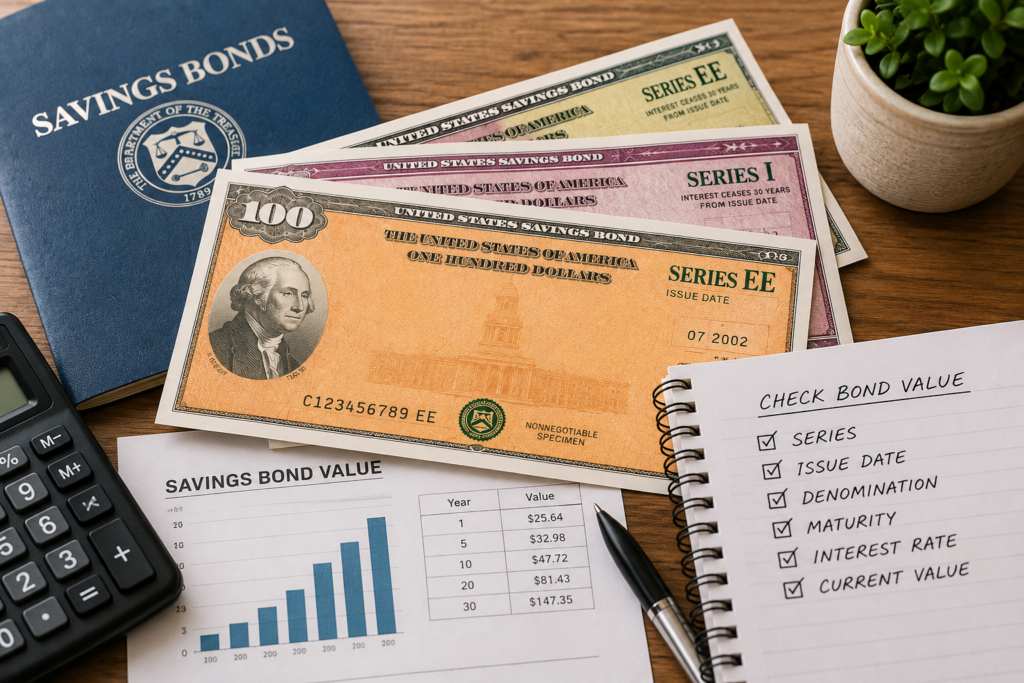
When a savings bond reaches final maturity, it generally stops earning additional interest.
This is important for people who have held savings bonds for decades.
You may have a bond that reached maturity years ago but is still sitting in a safe or filing cabinet.
Checking the bond’s maturity status can help you determine whether it is still earning interest or whether it may be time to consider redeeming it.
Can I Check a Savings Bond Online?
Yes, but the process depends on the type of bond.
Electronic savings bonds can generally be viewed through TreasuryDirect.
For eligible paper savings bonds, the U.S. Treasury provides a Savings Bond Calculator.
If you have a paper bond, gather its series, denomination, and issue date before using the calculator.
Be careful when using third-party websites. Avoid entering sensitive financial information into websites you do not trust.
What If I Lost My Savings Bond?
If you lost a paper savings bond, that does not necessarily mean the money is gone.
The U.S. Treasury has procedures for replacing or recovering information about lost, stolen, or destroyed savings bonds.
You may need information about the bond and its owner.
If you believe a lost bond could be valuable, use official Treasury instructions rather than relying on an unknown third-party service.
What If I Inherited Savings Bonds?
Inherited savings bonds can require additional steps.
If you inherited bonds from a parent, grandparent, spouse, or another relative, you should first determine:
- Who was listed as the owner
- Whether there was a co-owner
- Whether a beneficiary was named
- Whether the bond has reached maturity
- What tax rules apply
The redemption process can vary depending on the ownership situation.
If an inheritance involves a significant amount of money, consider getting professional legal or tax advice before redeeming the bonds.
Should I Cash an Old Savings Bond?
There is no universal answer.
Before redeeming an old savings bond, consider whether it is still earning interest and whether you need the money.
Ask yourself:
Has the bond reached final maturity?
If it has, it may no longer be earning interest.
Do you need the money now?
If you have an immediate financial need, the value of the bond may be useful.
What are the tax consequences?
Redeeming a bond can result in taxable interest.
What will you do with the money?
If you’re considering moving the money into another investment, compare your alternatives carefully.
For significant amounts, professional financial or tax advice may be appropriate.
How to Calculate the Value of Multiple Savings Bonds
If you have several savings bonds, don’t assume that they all have the same value.
Create a simple list of your bonds.
| Bond | Series | Issue Date | Denomination | Current Value |
|---|---|---|---|---|
| 1 | EE | Issue date | $50 | Check Treasury calculator |
| 2 | EE | Issue date | $100 | Check Treasury calculator |
| 3 | I | Issue date | $100 | Check Treasury calculator |
| 4 | EE | Issue date | $500 | Check Treasury calculator |
Calculate each bond separately and then add the values together.
This is particularly useful if you have inherited a collection or have accumulated savings bonds over many years.
What Information Do I Need to Find My Bond’s Value?
If you want to find the value of a savings bond, the most useful information is:
Series + issue date + denomination
For example:
Series EE — June 2002 — $100
That information is much more useful than simply saying you have a $100 savings bond.
The issue date can affect the applicable interest rate, maturity rules, and final value.
Common Mistakes When Checking Savings Bond Value
Mistake 1: Assuming the printed amount is the current value
The bond may have earned interest.
Mistake 2: Ignoring the issue date
The issue date can determine which interest and maturity rules apply.
Mistake 3: Assuming every bond is Series EE or I
Older bonds may belong to discontinued series.
Mistake 4: Forgetting about final maturity
A bond that has reached final maturity may no longer be earning interest.
Mistake 5: Relying on a generic estimate
A generic estimate may not accurately reflect the value of your particular bond.
Mistake 6: Sharing sensitive information online
Avoid publishing your complete bond serial number, owner’s personal information, or other sensitive details.
Why You Should Check Your Old Savings Bonds
An old savings bond may look like nothing more than a piece of paper, but it can represent a real financial asset.
You may have accumulated years of interest without realizing it.
Even if the bond has already reached final maturity, knowing its value can help you understand your overall financial position.
That’s why checking an old savings bond can be worthwhile.
If you have several bonds, creating an inventory can also make it easier to keep track of your investments and determine which bonds have matured.
Final Thoughts
If you’ve been asking “How much is my savings bond worth?”, the answer depends on the specific bond you own.
The most important details are the series, issue date, denomination, accumulated interest, and maturity status.
Series EE and Series I bonds have different characteristics, while older savings bonds can follow different historical rules.
Instead of guessing the value from the number printed on the bond, use the information on the bond to check its current value through official U.S. Treasury resources.
If you have an old savings bond sitting in a drawer, safe, or family file, it may be worth taking a few minutes to investigate. You could discover that a forgotten investment is worth more than you expected.
For more articles about finance, business, investing, money, and other useful topics, explore BaiduMag and keep learning about the financial decisions that matter to you.
Frequently Asked Questions
How much is my savings bond worth?
Your savings bond’s value depends on its series, issue date, denomination, accumulated interest, and maturity status. The U.S. Treasury Savings Bond Calculator can help determine the value of eligible paper bonds.
How do I check the value of an old savings bond?
Find the bond’s series, issue date, and denomination, then use the appropriate U.S. Treasury resources to calculate its current value.
How much is a $50 savings bond worth?
There is no universal value for a $50 savings bond. Its current value depends on its series, issue date, and accumulated interest.
How much is a $100 savings bond worth?
A $100 savings bond can be worth more than $100 if it has accumulated interest. The exact value depends on its series and issue date.
Are old savings bonds still worth money?
Yes. Old savings bonds can still have value. Some may have accumulated significant interest, while others may have already reached final maturity.
Do savings bonds expire?
Savings bonds generally do not simply become worthless because they are old. However, many stop earning interest after reaching final maturity.
Do Series EE bonds still earn interest?
Series EE bonds generally earn interest for up to 30 years. Once they reach final maturity, they stop earning additional interest.
Do Series I bonds earn interest forever?
No. Series I bonds generally earn interest for up to 30 years.
Can I cash a savings bond after one year?
Current Series EE and Series I savings bonds generally can be redeemed after 12 months. Redeeming before five years generally results in losing the most recent three months of interest.
Are savings bonds taxable?
Savings bond interest is generally subject to federal income tax but is generally exempt from state and local income taxes.
Where can I calculate my savings bond value?
The U.S. Treasury provides a Savings Bond Calculator for eligible paper savings bonds. Electronic bonds can generally be managed through TreasuryDirect.
What should I do if I inherited savings bonds?
Identify the bond series, issue date, and ownership information first. Then review the applicable Treasury rules for inherited bonds, redemption, and taxes. For complicated estates or significant amounts, consider professional advice.