




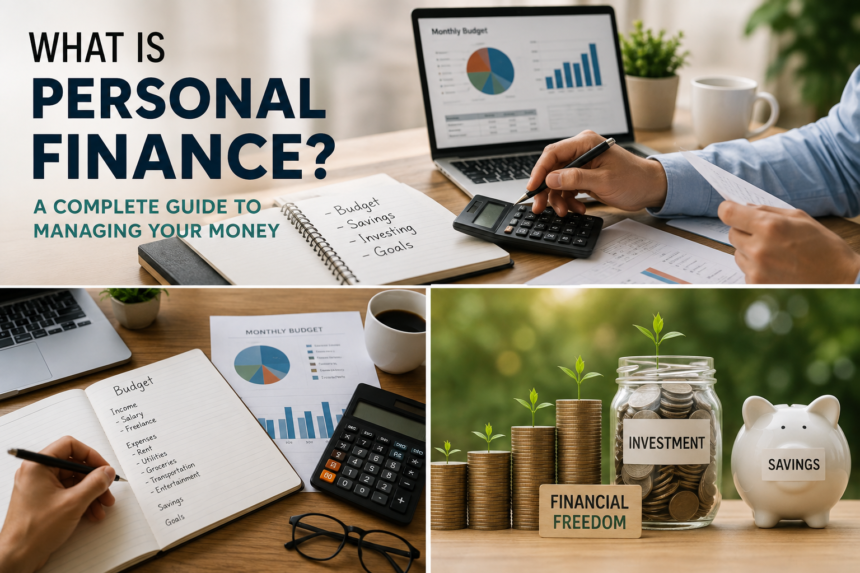
What Is Personal Finance? A Complete Guide to Managing Your Money
Personal finance is an important part of everyday life. Whether you are earning your first paycheck, studying at university, running a business, supporting a family, or preparing for retirement, understanding how to manage money can help you make more informed financial decisions.
Many people think personal finance is only about saving money or investing. In reality, it covers much more. Personal finance includes everything from managing your income and creating a budget to handling debt, building savings, choosing insurance, planning for major purchases, and preparing for long-term financial goals.
The good news is that you do not need to be a financial expert to improve your money management skills. By understanding a few basic principles and developing consistent habits, you can take greater control of your financial situation.
In this guide, we will explain what personal finance means, why it matters, and how you can create a practical approach to managing your money.
What Is Personal Finance?
Personal finance refers to how an individual or household manages money and financial resources.
It includes the decisions you make about:
- Earning income
- Spending money
- Creating a budget
- Saving
- Managing debt
- Investing
- Insurance
- Taxes
- Retirement planning
- Financial goals
Personal finance is not exactly the same for everyone. A university student may focus on managing education expenses and building an emergency fund, while a working parent may focus on a mortgage, family expenses, retirement, and long-term investments.
The important idea is to create a financial plan that matches your income, responsibilities, goals, and circumstances.
Why Is Personal Finance Important?
Money affects many areas of life. Poor financial decisions can create stress, while good financial habits can provide greater flexibility and help you prepare for unexpected expenses.
Learning about personal finance can help you:
Make Better Spending Decisions
A budget can help you understand where your money is going. Instead of spending without a plan, you can prioritize essential expenses and decide how much money you want to allocate to savings and other goals.
Prepare for Unexpected Expenses
Unexpected costs can happen at any time. A car repair, home maintenance problem, medical bill, or temporary loss of income can put pressure on a household budget.
Building an emergency fund can provide a financial cushion for certain unexpected situations.
Reduce Unnecessary Debt
Debt can be useful when managed responsibly, but high-interest debt can become expensive over time.
Understanding interest rates, repayment schedules, and borrowing costs can help you make more informed decisions.
Work Toward Long-Term Goals
Personal finance is also about the future. You may want to buy a home, start a business, pay for education, travel, or prepare for retirement.
Having clear financial goals can make it easier to decide how much to save and where your money should go.
The Five Main Areas of Personal Finance
Personal finance can be divided into several major areas.
1. Income
Income is the money you receive from work, business activities, investments, or other legitimate sources.
For many people, salary or wages are the primary source of income. Others may have income from freelance work, rental property, investments, or a small business.
Understanding your total income is the first step toward creating a realistic financial plan.
2. Spending
Spending includes the money you use for everyday needs and wants.
Common expenses include:
- Housing
- Food
- Transportation
- Utilities
- Education
- Insurance
- Entertainment
- Clothing
- Subscriptions
Tracking your spending can reveal patterns that you may not notice otherwise.
For example, several small subscriptions or frequent restaurant purchases may seem insignificant individually but can add up over a year.
3. Saving
Saving means setting aside part of your income for future use.
People save for different reasons, including:
- Emergency expenses
- Short-term purchases
- Education
- Travel
- A home
- Business plans
- Retirement
The amount you save will depend on your income and circumstances. Even starting with a small, consistent amount can help develop a strong savings habit.
4. Investing
Investing involves putting money into assets or financial products with the expectation of potentially earning a return over time.
Depending on your location and circumstances, investments may include stocks, bonds, mutual funds, exchange-traded funds, real estate, or other assets.
Investing involves risk, and returns are not guaranteed. Before investing, it is important to understand the product, fees, risks, and your own financial goals.
5. Protection
Financial protection includes strategies such as insurance and maintaining appropriate emergency savings.
Insurance can help protect against certain financial losses, depending on the policy.
Common types include:
- Health insurance
- Life insurance
- Auto insurance
- Home insurance
- Disability insurance
The right coverage depends on individual circumstances and local requirements.
How to Create a Personal Budget
A budget is one of the simplest tools for managing personal finances.
A budget gives you a plan for how you will use your income during a specific period.
Step 1: Calculate Your Income
Start by identifying your regular income.
If your income changes from month to month, use a realistic estimate based on your recent income rather than assuming your highest earning month will continue.
Step 2: List Your Expenses
Write down your regular expenses.
Separate them into categories such as housing, food, transportation, utilities, debt payments, entertainment, and savings.
Step 3: Separate Needs From Wants
Needs are expenses that are generally necessary for basic living, while wants are purchases that improve convenience or enjoyment but may not be essential.
The distinction is not always identical for everyone. The purpose is simply to understand which expenses have greater priority when money is limited.
Step 4: Set Savings Goals
Decide how much you want to save regularly.
You can create separate goals for emergency savings, short-term purchases, and long-term objectives.
Step 5: Review Your Budget
A budget should not be treated as something you create once and never change.
Review it regularly. If your income, rent, family responsibilities, or other expenses change, adjust your plan.
What Is an Emergency Fund?
An emergency fund is money set aside for unexpected expenses or financial disruptions.
It is different from money you save for a vacation, new phone, or other planned purchase.
An emergency fund can help cover unexpected costs such as:
- Urgent repairs
- Unexpected household expenses
- Temporary income disruptions
- Other unplanned financial needs
The appropriate amount depends on your personal circumstances, income stability, essential expenses, and financial responsibilities.
A useful approach is to start with a small achievable target and gradually increase it over time.
How to Manage Debt
Debt management is another important part of personal finance.
Some forms of borrowing may help people accomplish important goals, while expensive or poorly managed debt can make it harder to build financial stability.
Start by making a list of your debts and recording:
- Current balance
- Interest rate
- Minimum payment
- Due date
- Repayment period
This gives you a clear picture of your financial obligations.
Prioritize High-Cost Debt
When possible, paying down high-interest debt can reduce the amount of money you spend on interest.
Two commonly discussed approaches are the debt avalanche and debt snowball methods.
The debt avalanche method generally focuses on paying extra toward the highest-interest debt first.
The debt snowball method focuses on paying off the smallest balance first, which can provide a sense of progress and motivation.
The best approach depends on your circumstances and what helps you maintain consistent repayments.
Saving vs. Investing
Saving and investing are related but different.
Saving generally means keeping money in a relatively accessible place for future needs.
Investing involves accepting some level of risk in exchange for the potential for long-term growth.
Money you may need soon is often better suited to an appropriate savings vehicle rather than investments whose value can fluctuate.
Long-term money may have more opportunities for investment, depending on your risk tolerance, goals, time horizon, and financial situation.
Before investing, research carefully and consider seeking qualified professional advice when appropriate.
Understanding Compound Growth
Compound growth is one reason people often start saving and investing early.
When returns are earned and then remain invested, future growth can potentially occur on both the original amount and previous returns.
For example, imagine someone regularly adds money to an investment account and earns returns over many years. If those returns remain invested, the account can potentially grow faster than it would if only the original contributions were considered.
However, investment returns are not guaranteed, and actual results can vary.
The key lesson is that time can be an important factor in long-term financial planning.
How to Set Financial Goals
A financial goal gives your money a purpose.
Instead of simply saying, “I want to save more,” create a specific objective.
Examples include:
- Build an emergency fund
- Pay off a credit card balance
- Save for education
- Buy a vehicle
- Save for a home
- Start a business
- Prepare for retirement
A useful goal should be realistic and measurable.
For example, rather than saying “I want to save money,” you might decide to save a specific amount each month toward an emergency fund.
Breaking a large goal into smaller monthly targets can make it easier to stay consistent.
Common Personal Finance Mistakes
Even people who understand basic financial concepts can make mistakes.
Spending More Than You Earn
Regularly spending more than your income can lead to increasing debt and financial pressure.
Not Tracking Expenses
Without tracking expenses, it is difficult to know where your money is going.
Ignoring High-Interest Debt
High-interest balances can become expensive if they remain unpaid for long periods.
Having No Emergency Savings
Without savings, unexpected expenses may require borrowing.
Investing Without Understanding the Risk
Every investment has some level of risk. Never assume that an investment will automatically produce profits.
Making Emotional Financial Decisions
Fear, excitement, social pressure, and the desire to make quick profits can influence financial decisions.
Taking time to research and understand an opportunity can help reduce impulsive decisions.
Personal Finance for Students
Students can benefit from learning personal finance early.
You do not need a high income to start developing good financial habits.
Students can begin by:
- Tracking expenses
- Creating a basic budget
- Avoiding unnecessary debt
- Learning about saving
- Comparing prices
- Building financial knowledge
- Setting small financial goals
Learning these habits early can make financial management easier later in life.
Personal Finance for Young Professionals
Starting a career often brings new financial responsibilities.
A young professional may need to manage rent, transportation, insurance, student loans, family responsibilities, and savings at the same time.
A practical approach is to establish a budget, build emergency savings, manage debt responsibly, and begin thinking about long-term financial goals.
As income increases, it can be useful to avoid automatically increasing spending at the same rate.
How Technology Can Help With Money Management
Technology has made tracking personal finances easier.
Budgeting apps, spreadsheets, banking tools, and financial calculators can help you monitor expenses and organize financial information.
However, technology should be treated as a tool rather than a replacement for financial judgment.
Before using any financial app or service, review its privacy practices, security features, fees, and reputation.
How to Improve Your Financial Knowledge
Financial education is a lifelong process.
You can improve your knowledge by:
- Reading reliable financial education resources
- Learning basic accounting concepts
- Understanding interest rates
- Studying investment fundamentals
- Comparing financial products
- Following reputable economic information
- Learning about taxes and insurance
- Asking qualified professionals questions when needed
Be careful with financial content that promises guaranteed profits or extremely quick wealth.
Good financial education should help you understand both potential benefits and risks.
A Simple Personal Finance Checklist
If you are unsure where to start, use this basic checklist:
- Calculate your monthly income.
- Track your regular expenses.
- Create a realistic budget.
- Identify unnecessary spending.
- Build an emergency savings fund.
- Review your debts and interest rates.
- Set short-term and long-term goals.
- Learn the basics of investing before putting money at risk.
- Review your insurance needs.
- Check your financial plan regularly.
You do not have to complete everything immediately. Personal finance is a process, and small improvements can add up over time.
Frequently Asked Questions
What does personal finance mean?
Personal finance refers to how individuals or households manage their income, spending, savings, debt, investments, insurance, and financial goals.
Why is personal finance important?
Personal finance can help you make informed decisions about spending, saving, borrowing, and investing while preparing for both expected and unexpected financial needs.
How can I start managing my money?
Start by calculating your income, tracking expenses, creating a budget, and establishing realistic savings and debt-management goals.
What is the difference between saving and investing?
Saving generally focuses on keeping money available for future needs, while investing involves putting money into assets that may increase or decrease in value over time.
How much money should I save?
There is no single amount that works for everyone. Your savings target should consider your income, essential expenses, financial responsibilities, and goals. Starting with a manageable amount and increasing it over time can be a practical approach.
Is investing part of personal finance?
Yes. Investing is one component of personal finance, along with budgeting, saving, debt management, insurance, and financial planning.
Final Thoughts
Personal finance is not about becoming wealthy overnight. It is about understanding your money and making thoughtful decisions that support your current needs and future goals.
Creating a budget, tracking expenses, building emergency savings, managing debt, and learning about investing can all contribute to better financial habits.
The most important step is simply to begin. You can start with something as simple as reviewing your monthly expenses and identifying one area where you can improve.
As your financial knowledge grows, you can develop a more detailed plan that reflects your goals, circumstances, and priorities.
Remember that financial products, tax rules, investment opportunities, and regulations can vary by country and change over time. For important financial decisions, consider using current information from reliable sources and consulting a qualified financial professional when appropriate.