




How to Lower Your Car Insurance Costs: Simple Ways to Save Money
Car insurance is an important expense for millions of drivers. It can protect you financially after an accident, help cover damage to your vehicle, and provide support when unexpected situations occur. However, insurance premiums can sometimes feel expensive, especially when prices increase at renewal time.
The good news is that there may be several ways to lower your car insurance costs without simply choosing the cheapest policy available. Your premium is based on many factors, and understanding those factors can help you make smarter decisions about your coverage.
From comparing insurance providers and adjusting your deductible to maintaining a good driving record and asking about discounts, small changes can sometimes make a meaningful difference to what you pay.
In this guide, we will explore practical ways to lower car insurance costs, explain why premiums vary, and discuss how to save money while maintaining appropriate protection for your needs.
Why Is Car Insurance So Expensive?
Before looking at ways to reduce your insurance premium, it helps to understand why insurance prices can vary.
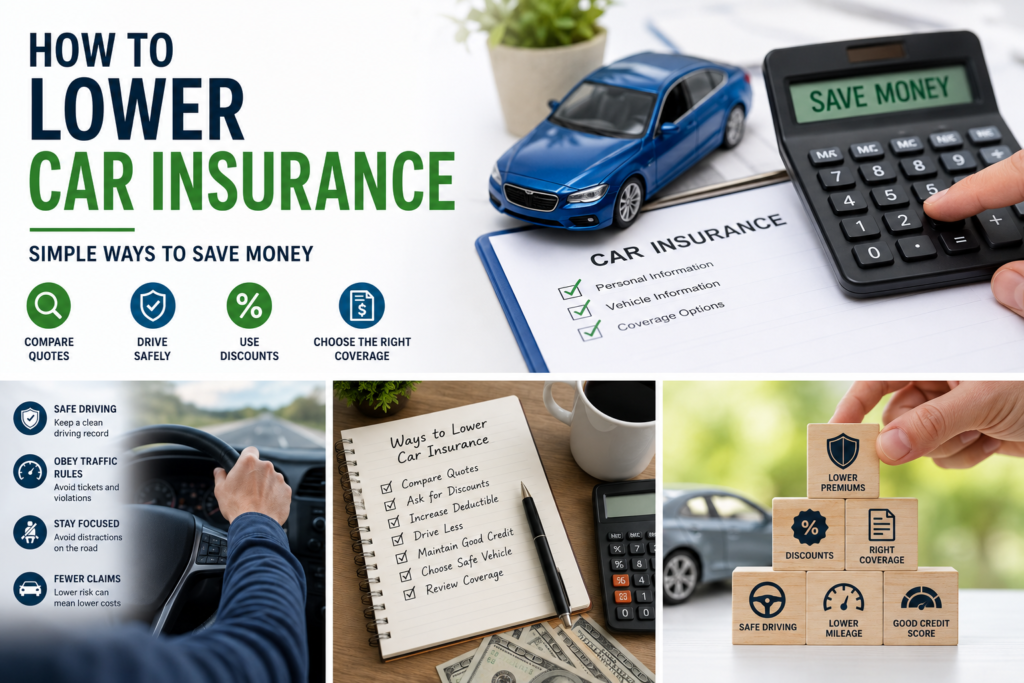
Insurance companies generally use multiple factors when calculating the cost of a policy. These factors can include your driving history, the type of vehicle you own, your location, the coverage you select, and other information permitted by applicable laws and regulations.
For example, a driver with a long history of safe driving may be considered less likely to make an insurance claim than someone with several recent accidents or traffic violations. Similarly, some vehicles may cost more to repair or replace, which can affect the cost of insurance.
Insurance prices can also change because of broader economic factors. Rising repair costs, vehicle technology, replacement parts, medical expenses, and the number or cost of claims in an area can all potentially influence premiums.
Although you cannot control every factor that affects your insurance price, you may have more control over your premium than you realize.
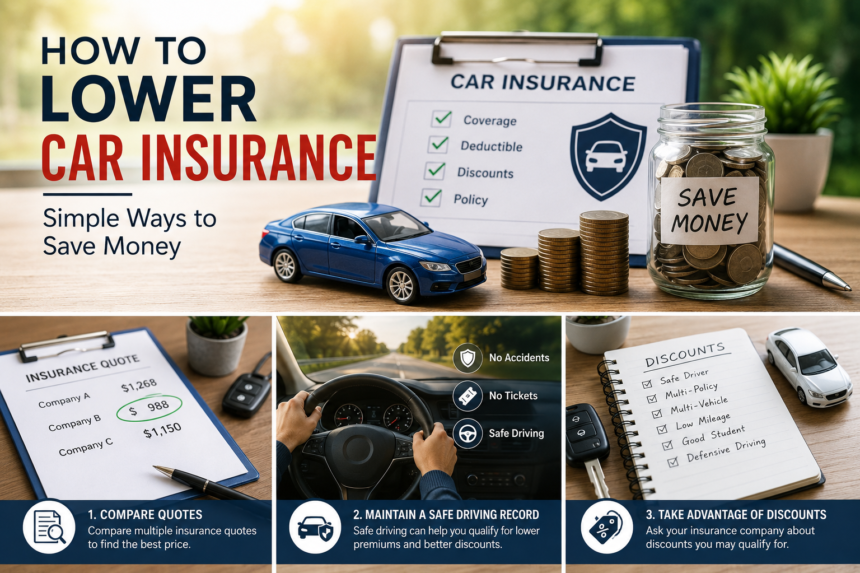
1. Compare Quotes From Multiple Insurance Companies
One of the most effective ways to look for a lower car insurance price is to compare quotes from more than one provider.
Insurance companies do not always calculate premiums in exactly the same way. One company may offer a lower price for a driver with your particular vehicle, driving history, location, or coverage needs, while another may charge considerably more.
That is why it can be useful to avoid automatically renewing your existing policy without comparing other options.
When comparing quotes, make sure you are comparing similar levels of coverage. A policy may appear much cheaper because it includes lower coverage limits, a higher deductible, or fewer additional features.
Consider comparing:
- The premium price
- Coverage limits
- Deductible amounts
- Collision coverage
- Comprehensive coverage
- Liability protection
- Additional benefits
- Exclusions and policy conditions
- Customer service and claims support
The cheapest policy is not always the best policy. The goal should be to find coverage that provides appropriate protection at a reasonable price.
2. Maintain a Safe Driving Record
Your driving record can have a significant effect on your car insurance costs.
Insurance companies may consider your history of accidents, traffic violations, and insurance claims when assessing risk. Maintaining a record of safe and responsible driving may help you qualify for better pricing or certain discounts, depending on the insurer and your location.
Safe driving habits include:
- Following speed limits
- Avoiding distracted driving
- Keeping a safe distance from other vehicles
- Obeying traffic signals and signs
- Avoiding aggressive driving
- Driving carefully in poor weather
- Never driving while impaired
A single mistake can sometimes lead to expenses that extend beyond a traffic ticket. An accident or violation may also affect your insurance premium.
Developing consistent safe driving habits can therefore benefit both your physical safety and your long-term financial situation.
3. Ask About Available Discounts
Many insurance companies offer discounts that policyholders may not automatically know about.
The discounts available vary between insurers, but it can be worthwhile to ask directly which discounts you may qualify for.
Common examples may include:
Safe Driver Discounts
Drivers with a clean driving record may qualify for lower rates or special pricing.
Multi-Policy Discounts
Some insurance companies offer discounts to customers who purchase more than one type of insurance policy through the same provider. For example, combining car insurance with another eligible policy may reduce the total cost.
Multi-Vehicle Discounts
If multiple vehicles in your household are insured with the same company, you may qualify for a multi-vehicle discount.
Low-Mileage Discounts
If you drive fewer miles than the average driver, some insurers may offer a discount or a usage-based insurance option.
Student Discounts
Students with strong academic performance may qualify for discounts with certain insurance providers.
Vehicle Safety Discounts
Some modern safety features may help reduce the risk or severity of accidents and could qualify you for a discount, depending on the insurer.
Defensive Driving Discounts
Completing an approved defensive driving course may help certain drivers qualify for lower insurance rates.
Always ask your insurer about current discounts rather than assuming that every discount will automatically be applied to your policy.
4. Consider Raising Your Deductible
Your deductible is the amount you may be required to pay out of pocket before certain parts of your insurance coverage contribute to an eligible claim.
In many cases, choosing a higher deductible can result in a lower insurance premium. However, this approach should be considered carefully.
For example, if you increase your deductible, you may save money on your monthly or annual insurance costs. But if you later need to make a covered claim, you may need to pay more yourself.
Before choosing a higher deductible, ask yourself:
- Could I comfortably afford this amount after an accident?
- Would the premium savings justify the additional financial risk?
- Do I have an emergency fund available?
- How often am I likely to make a claim?
A higher deductible can be useful for some drivers, but it should not be so high that paying it would create serious financial difficulty.
5. Review Your Coverage Regularly
Your insurance needs can change over time.
You may have purchased your original policy several years ago when your financial situation, vehicle value, driving habits, or personal circumstances were different.
Reviewing your coverage periodically can help you determine whether your policy still makes sense.
For example, you may want to consider:
- Whether you still need every optional coverage feature
- Whether your vehicle’s value has changed
- Whether your annual mileage has changed
- Whether your deductible remains appropriate
- Whether you qualify for new discounts
- Whether your insurer offers a better policy
- Whether another provider offers more suitable coverage
This does not necessarily mean reducing your protection. Instead, the goal is to make sure you are not paying for coverage that no longer matches your current needs.
6. Drive Fewer Miles When Possible
The number of miles you drive can sometimes influence your insurance premium.
Generally, spending more time on the road can increase your exposure to potential accidents. Drivers who commute long distances every day may therefore face different insurance costs than people who drive less frequently.
If your driving habits have changed, make sure your insurance provider has accurate information.
For example, you may now:
- Work from home
- Have a shorter commute
- Use public transportation more often
- Drive only occasionally
- Have changed jobs
- No longer use your vehicle for certain activities
Some insurance providers offer mileage-based or usage-based programs. These programs may be suitable for certain drivers, but it is important to understand how they work and whether they are a good fit for your situation.
7. Choose Your Vehicle Carefully
The type of car you drive can affect how much you pay for insurance.
Some vehicles may cost more to repair, while others may be more expensive to replace after a serious accident. Vehicles with high-performance engines, expensive technology, or costly replacement parts may also have different insurance costs.
When shopping for a vehicle, consider researching the likely insurance cost before making a purchase.
Factors that may influence vehicle-related insurance pricing can include:
- The vehicle’s value
- Repair costs
- Availability and cost of replacement parts
- Safety features
- Theft risk
- Engine size and performance
- Historical claims associated with the model
A less expensive car does not automatically mean cheaper insurance, but insurance costs should be one of the factors considered when calculating the total cost of owning a vehicle.
8. Improve Your Credit Profile Where Relevant
In some places, insurance companies may legally consider certain credit-related information when calculating insurance prices. The rules differ significantly by country, state, province, and insurer.
If credit information is used where you live, maintaining responsible financial habits may potentially affect your insurance options.
These habits can include:
- Paying bills on time
- Managing debt responsibly
- Reviewing your credit information for errors
- Avoiding unnecessary financial difficulties where possible
However, insurance regulations vary. Some locations restrict or prohibit the use of credit information for insurance pricing. Always check the rules that apply in your area.
9. Avoid Making Small Claims When Appropriate
Insurance exists to provide financial protection when unexpected losses occur. However, making multiple claims may affect future premiums in some circumstances.
For minor damage that costs only slightly more than your deductible, some drivers may decide to pay for repairs themselves rather than make a claim. However, this decision depends on your financial situation, policy terms, the nature of the damage, and applicable requirements.
Before deciding not to report an incident, carefully review your insurance policy and any legal or contractual obligations that may apply.
You should never avoid reporting an accident or other event when your policy, local law, lender, or other applicable rules require disclosure.
The key point is to understand your deductible and policy before assuming that every small expense should result in an insurance claim.
10. Take Advantage of Vehicle Safety Features
Modern vehicles may include safety technology designed to help prevent accidents or reduce their severity.
Depending on the vehicle and insurance provider, features that may be relevant include:
- Automatic emergency braking
- Lane departure warnings
- Blind-spot monitoring
- Anti-lock braking systems
- Electronic stability control
- Airbags
- Anti-theft systems
- Parking sensors
- Backup cameras
These features can potentially make driving safer and, in some cases, may influence insurance costs.
However, advanced technology can also be expensive to repair or replace. Therefore, newer safety features do not always guarantee a lower premium.
When purchasing a vehicle, consider both the safety benefits and the potential long-term repair costs.
11. Consider Paying Your Premium in a Different Way
Some insurance companies offer different payment options.
For example, paying your premium in full rather than making monthly installments may reduce certain administrative or installment charges. Other providers may offer discounts for automatic payments or electronic billing.
Ask your insurer whether any savings are available for:
- Paying the full premium upfront
- Automatic payments
- Paperless billing
- Renewing online
- Choosing a different billing schedule
These savings may not be available everywhere, but asking can help you understand all your options.
12. Bundle Your Insurance Policies
Insurance bundling involves purchasing multiple eligible policies from the same insurance company.
For example, some customers may combine car insurance with home, renters, or other insurance products.
A bundled package may offer a discount, but you should still compare the total cost carefully.
Sometimes buying policies separately from different companies can be less expensive. The only way to know is to compare the complete cost and coverage.
Do not assume that a bundle automatically represents the lowest price.
Instead, compare:
- The combined cost
- Individual policy prices
- Coverage levels
- Deductibles
- Available discounts
- Customer service quality
The best choice depends on your individual needs.
13. Keep Your Insurance Information Accurate
Providing accurate information to your insurance company is important.
If your circumstances change, you may need to update your insurer. Examples could include moving to a new address, changing your daily commute, adding or removing a driver, or changing how the vehicle is used.
Incorrect information can sometimes lead to problems with your policy or claims.
On the other hand, keeping your information current may help ensure you are paying an appropriate price based on your actual circumstances.
For example, if you significantly reduce your annual mileage, your insurance company may have a different pricing option available.
Review your policy information regularly and notify your provider about relevant changes.
14. Shop Around Before Your Policy Renews
Many people simply renew their insurance policy each year because it feels easier.
However, insurance prices can change, and the company that offered the best rate several years ago may no longer be the most competitive option.
Consider reviewing your options before your renewal date.
Starting your comparison early can give you more time to:
- Compare several providers
- Review coverage options
- Ask questions
- Check available discounts
- Understand policy terms
- Avoid making rushed decisions
Do not wait until the last possible moment if you can avoid it.
The goal is not necessarily to switch insurance companies every year. Instead, regular comparisons can help you understand whether your current policy continues to offer good value.
15. Improve Your Overall Insurance Risk Profile
Insurance companies assess risk using many factors, some of which may be outside your control. However, there are areas where responsible decisions can make a difference over time.
You may be able to improve your overall risk profile by:
- Driving safely
- Avoiding traffic violations
- Maintaining continuous insurance coverage when possible
- Choosing a suitable vehicle
- Keeping accurate policy information
- Reducing unnecessary mileage
- Taking approved safety or defensive driving courses
- Maintaining the vehicle properly
Insurance pricing is rarely based on one single decision. Instead, a combination of factors can influence your premium.
Small improvements over time may help you become a more attractive customer to insurers.
How Much Coverage Should You Keep?
While looking for ways to lower car insurance costs, it is important not to focus only on getting the lowest possible premium.
Reducing coverage may save money today but could create significant financial problems after a serious accident.
The appropriate level of coverage depends on many factors, including:
- Your local legal requirements
- The value of your vehicle
- Whether you own or finance the vehicle
- Your personal assets
- Your financial situation
- Your ability to pay unexpected expenses
- Your driving habits
If your vehicle is financed or leased, your lender or leasing company may require specific types or levels of insurance.
Before reducing coverage, make sure you understand the possible consequences.
The best insurance policy is generally one that provides suitable protection while fitting reasonably within your budget.
Common Mistakes to Avoid When Trying to Lower Car Insurance
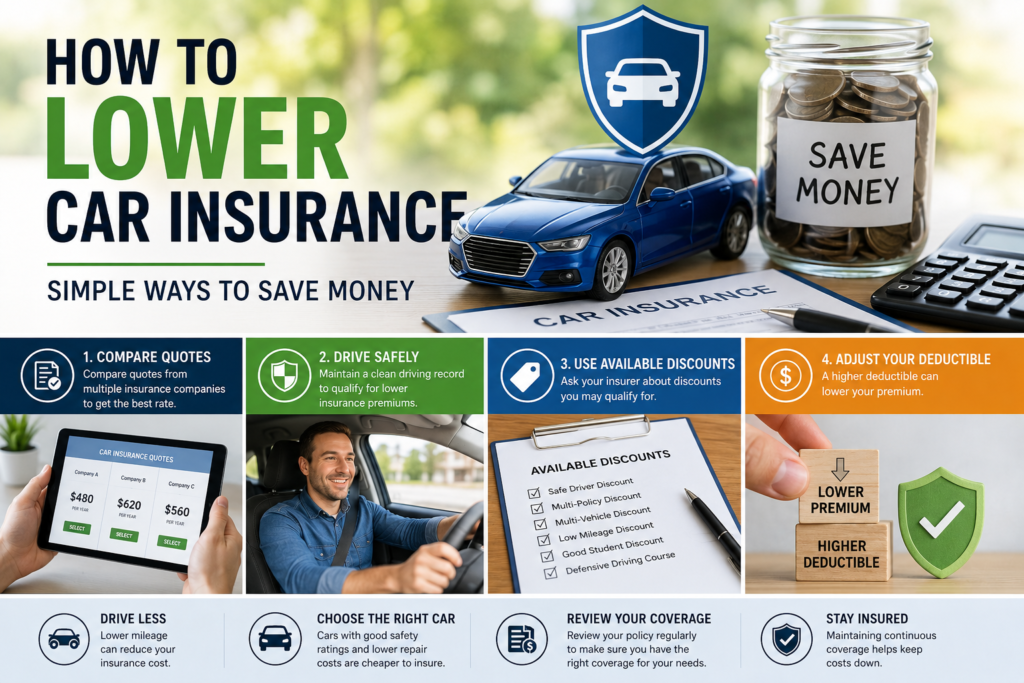
There are several mistakes drivers can make when trying to save money.
Choosing the Cheapest Policy Without Comparing Coverage
A low premium may look attractive, but it is important to understand what the policy actually covers.
Setting a Deductible You Cannot Afford
A higher deductible can lower your premium, but it can create financial stress if you need to make a claim.
Forgetting to Ask About Discounts
You may qualify for discounts that are not immediately obvious.
Providing Inaccurate Information
Incorrect details about your vehicle, address, driving history, or vehicle usage can create serious problems.
Cancelling Coverage Without a Replacement
Driving without required insurance can lead to legal and financial consequences. Always make sure you understand the rules in your location and avoid unnecessary gaps in coverage.
Never Reviewing Your Policy
Your needs can change, so an insurance policy that was suitable five years ago may no longer be the best option today.
How Often Should You Compare Car Insurance?
There is no single schedule that works for everyone, but many drivers find it useful to review their insurance periodically.
You may want to compare options:
- Before renewal
- After moving
- After getting married or experiencing another relevant life change
- After changing vehicles
- After a significant change in mileage
- After adding or removing a driver
- After improving your driving record
- When your premium increases substantially
Regular reviews can help you identify opportunities to reduce costs or improve coverage.
Frequently Asked Questions
What is the easiest way to lower car insurance costs?
Comparing quotes from multiple insurers is often one of the simplest ways to look for a lower price. You can also ask about discounts, review your coverage, maintain a safe driving record, and consider whether your deductible is appropriate.
Does a higher deductible lower car insurance?
In many cases, choosing a higher deductible can reduce your insurance premium. However, you will usually need to pay more out of pocket if you make a covered claim. Choose a deductible you can realistically afford.
Can safe driving lower my insurance premium?
Safe driving may help you qualify for better rates or discounts, depending on your insurer and local regulations. Avoiding accidents and traffic violations can also help protect your insurance record over time.
Should I change insurance companies to save money?
Switching providers may help you find a better price, but it is important to compare the coverage carefully. The lowest price is not always the best value. Review policy limits, deductibles, exclusions, and benefits before making a decision.
Can driving fewer miles reduce insurance costs?
Possibly. Some insurance companies offer lower rates or special programs for drivers who travel fewer miles. Contact your insurer to ask whether your current mileage affects your premium.
What discounts should I ask my insurance company about?
You can ask about safe-driver discounts, multi-policy discounts, multi-vehicle discounts, low-mileage programs, student discounts, defensive driving discounts, and vehicle safety discounts. Availability varies by company and location.
Is it a good idea to reduce coverage to save money?
Reducing coverage can lower your premium, but it may leave you with less financial protection after an accident. Consider your legal requirements, vehicle value, financial situation, and potential risks before changing coverage.
Final Thoughts
Learning how to lower car insurance costs is not simply about finding the cheapest company. It is about understanding your coverage, comparing providers, asking about discounts, and making informed decisions based on your personal needs.
A good place to start is by reviewing your current policy. Check what you are paying for, confirm that your information is accurate, and ask whether any discounts are available. You can then compare quotes from multiple providers using similar levels of coverage.
Maintaining a safe driving record, choosing an appropriate deductible, reducing unnecessary mileage, and reviewing your insurance regularly may also help control your costs.
Remember that insurance requirements and pricing rules vary by location. What works for one driver may not work for another, and the cheapest policy may not always provide enough protection.
By taking time to understand your options, you can make smarter decisions about your car insurance and potentially find ways to save money without sacrificing the coverage you need.