





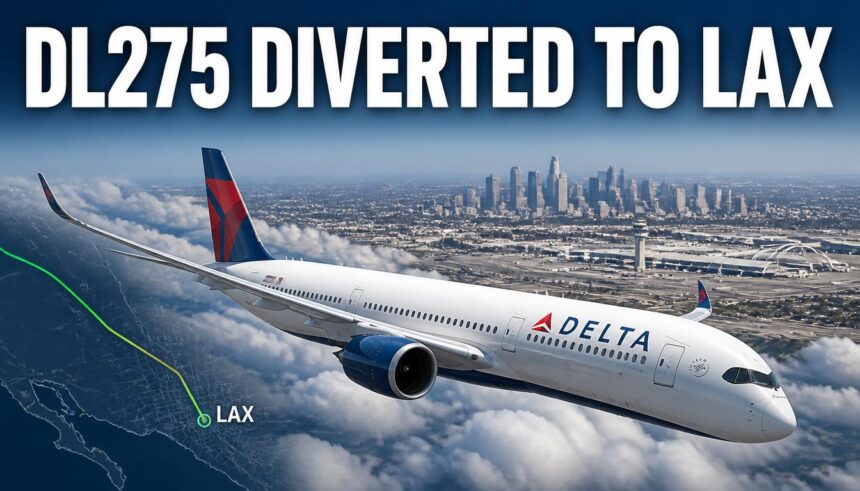
Air travel is often considered one of the safest forms of transportation in the world. Millions of passengers travel across continents every day without experiencing any major issues. However, when an aircraft changes its planned route and lands at a different airport, people naturally become curious about what happened. This is exactly what occurred when Delta Flight DL275 to Divert to LAX creating significant attention among travelers, aviation enthusiasts, and news outlets.
Understanding Delta Flight DL275 and Its Regular Route
Delta Flight DL275 is a long-distance international service connecting Detroit Metropolitan Wayne County Airport in the United States with Tokyo Haneda Airport in Japan. This route is one of the airline’s important trans-Pacific connections, carrying hundreds of passengers between North America and Asia.
The flight normally takes approximately thirteen hours and crosses vast sections of the Pacific Ocean. Because the aircraft spends many hours over remote regions, every system onboard must operate correctly. Airlines carefully plan these flights with alternate airports, fuel reserves, maintenance support options, and emergency procedures long before departure.
The aircraft assigned to this route was an Airbus A350-900, one of the most advanced passenger aircraft currently flying. Known for its fuel efficiency, comfort, and long-range capabilities, the Airbus A350 is widely used by major international airlines. The aircraft is equipped with sophisticated navigation systems, advanced safety technology, and powerful Rolls-Royce Trent XWB engines designed specifically for long-haul operations.
Passengers boarding the flight expected a routine journey to Tokyo. Weather conditions were generally favorable, and the departure occurred without any significant concerns. Everything appeared normal during the early stages of the flight as the aircraft climbed to its cruising altitude and continued westward across the Pacific Ocean.
What Happened During the Flight?

Several hours after departure, the flight crew detected an issue involving the aircraft’s engine anti-ice system. While this may sound like a minor technical problem, aviation professionals take any system irregularity seriously, especially during long-haul international operations over remote oceanic routes.
At cruising altitude, temperatures outside an aircraft can drop to extremely low levels. In such conditions, ice formation can become a concern for various aircraft components. The anti-ice system exists specifically to prevent dangerous ice accumulation and ensure engines continue operating efficiently and safely.
Once the crew identified the issue, they followed established procedures to evaluate the situation. Modern aircraft provide pilots with extensive system information, allowing them to assess the severity of technical abnormalities. Although the aircraft remained fully controllable and operational, the crew determined that continuing the trans-Pacific journey carried unnecessary risk.
Instead of proceeding toward Tokyo, the pilots chose to divert the flight. This decision was not made because the aircraft was in immediate danger, but because aviation safety standards require crews to address potential problems before they can become more serious. The decision demonstrated the industry’s commitment to proactive safety management rather than reactive problem-solving.
The Engine Anti-Ice System and Why It Matters
To understand why delta flight dl275 divert lax, it is important to understand the role of the engine anti-ice system. Commercial aircraft frequently operate in environments where temperatures can fall far below freezing. Ice accumulation inside or around critical engine components can negatively affect performance and reliability.
The anti-ice system uses heated air from the engines to prevent ice from forming in sensitive areas. By maintaining proper temperatures, the system helps ensure consistent airflow and protects important engine components during flight. Without effective anti-ice protection, aircraft operating in cold conditions could face reduced efficiency or increased mechanical stress.
In modern aviation, safety relies on layers of protection. Even when backup systems exist, airlines prefer to resolve issues before they develop further. A malfunctioning anti-ice system may not immediately threaten a flight, but it removes one of the protective layers designed to keep operations safe under all conditions.
This philosophy explains why pilots often choose caution over convenience. Passengers may sometimes wonder why an aircraft diverts when everything appears normal inside the cabin. The answer is simple: airline crews are trained to address potential risks early rather than wait for conditions to worsen.
Why Los Angeles International Airport Was Chosen
One of the most common questions surrounding the incident is why the aircraft diverted to Los Angeles International Airport instead of another airport that may have been geographically closer. The answer involves several operational and technical factors.
Los Angeles International Airport is one of the largest aviation hubs in the United States. It offers extensive maintenance capabilities, experienced engineering teams, and specialized support for wide-body aircraft like the Airbus A350. Because Delta operates significant services through Los Angeles, the airline also has access to additional resources that can assist passengers and flight crews.
When pilots consider diversion options, they evaluate far more than distance alone. Maintenance availability, runway length, weather conditions, passenger services, airline support facilities, and aircraft repair capabilities all influence the final decision. A closer airport may not necessarily be the best choice if it lacks the resources needed to inspect and repair a sophisticated aircraft.
Los Angeles provided a practical solution because technicians familiar with the Airbus A350 and Rolls-Royce engines were readily available. This allowed maintenance teams to quickly investigate the issue and prepare the aircraft for future operations while minimizing disruption for travelers.
The airport also offered greater flexibility for passenger rebooking. Travelers could be accommodated on alternative flights more easily than at smaller diversion airports. This helped Delta manage the situation efficiently while reducing inconvenience for customers.
How the Flight Crew Handled the Situation
One reason the incident attracted positive attention within aviation circles was the professionalism displayed by the flight crew. Airline pilots undergo extensive training to manage technical issues, diversions, and unexpected situations. Their response reflected the importance of preparation and adherence to established procedures.
After identifying the system concern, the crew communicated with airline operations personnel and maintenance specialists. Together, they reviewed available information and determined the safest course of action. Such decisions involve teamwork between pilots, dispatchers, engineers, and operational support staff.
Inside the cabin, many passengers reportedly remained calm because there were no dramatic signs of trouble. The aircraft continued flying normally, and the crew maintained clear communication throughout the diversion process. This helped reduce anxiety and ensured passengers understood that safety measures were being taken as a precaution.
The successful landing demonstrated how aviation systems are designed to handle unexpected events. Diversions are not signs of failure. Instead, they show that safety procedures are functioning exactly as intended. Pilots are empowered to make conservative decisions whenever circumstances justify additional caution.
For passengers, the experience may have been inconvenient due to travel delays, but the outcome highlighted the effectiveness of modern aviation training and operational planning.
Passenger Experience After Landing at LAX
Once the aircraft landed safely in Los Angeles, airline personnel immediately began assisting passengers. International flight diversions can create logistical challenges because travelers often have connecting flights, hotel reservations, business commitments, or family plans awaiting them at their destination.
Delta worked to provide accommodations and alternative travel arrangements for affected passengers. Some travelers continued to Tokyo on other available flights, while others experienced delays depending on scheduling and seat availability. Airline staff coordinated rebooking efforts and answered passenger questions regarding the unexpected change in plans.
Despite the disruption, the absence of injuries and the orderly handling of the situation reflected the airline’s preparedness. Large international carriers routinely develop contingency plans for operational interruptions, allowing them to respond quickly when diversions occur.
Many passengers later expressed appreciation for the professionalism shown by the flight crew and ground staff. While nobody enjoys travel delays, most travelers recognize that safety must remain the highest priority. The successful management of the incident helped maintain confidence in the airline’s procedures.
The event also served as a reminder that unexpected schedule changes can occur even on the most advanced aircraft. Experienced travelers often understand that flexibility is part of international air travel, particularly on long-distance routes crossing oceans and remote regions.
The Bigger Aviation Safety Lessons Behind the Incident
The story of delta flight dl275 diverted lax offers valuable lessons about aviation safety. Modern commercial aviation achieves remarkable safety levels because airlines, manufacturers, regulators, and flight crews constantly prioritize risk management and prevention.
Aircraft today are equipped with advanced monitoring systems capable of detecting potential issues before they become serious. These technologies provide crews with detailed information, allowing informed decisions based on real-time data. Rather than waiting for problems to escalate, pilots can respond early and reduce operational risks.
The incident also demonstrates the importance of maintenance programs. Airlines invest heavily in inspections, predictive maintenance technologies, and engineering support. When unusual system behavior is detected, technicians investigate thoroughly to identify root causes and implement corrective measures.
Another lesson involves decision-making culture. Aviation encourages conservative judgment. Pilots are trained to choose the safest option, even when that choice results in delays or additional costs. This philosophy has contributed significantly to the industry’s outstanding safety record.
For the general public, the diversion serves as an example of how safety systems work behind the scenes. Passengers often notice only the inconvenience of a delay, but every diversion represents a carefully considered decision intended to protect everyone onboard.
Why Incidents Like This Receive So Much Attention
Aviation incidents often generate widespread interest because air travel involves large numbers of passengers and complex technology. When a flight diverts unexpectedly, news outlets and social media users quickly begin searching for explanations.
The Airbus A350 is among the world’s most advanced passenger aircraft, which makes any operational issue particularly newsworthy. People are naturally curious when a modern aircraft equipped with cutting-edge technology changes course during an international journey.
Another reason for public attention is the visibility of flight tracking platforms. Today, millions of people can watch aircraft movements in real time. When a flight suddenly alters its route, online observers immediately notice the change and begin discussing possible explanations.
However, it is important to understand that diversions occur for many reasons and are not always signs of severe emergencies. Medical situations, weather changes, operational concerns, airport restrictions, and technical issues can all lead to diversions. In many cases, the aircraft remains perfectly safe throughout the event.
The Delta Flight DL275 incident became widely discussed because it combined a long-haul international route, a modern Airbus A350, and a precautionary diversion involving a critical aircraft system. Together, these factors created significant public interest and media coverage.
Conclusion
The incident involving delta flight dl275 diverted lax highlights how modern aviation safety procedures are designed to prevent problems before they become serious. After detecting an issue with the engine anti-ice system, the flight crew chose the safest available option by diverting to Los Angeles International Airport, where specialized maintenance resources and passenger support services were readily available. The Airbus A350 landed safely, no injuries were reported, and airline teams successfully assisted affected travelers. While the diversion caused delays and attracted global attention, it ultimately demonstrated the effectiveness of pilot training, aircraft monitoring technology, and the aviation industry’s unwavering commitment to passenger safety.
FAQs
Why was Delta Flight DL275 diverted to LAX?
Delta Flight DL275 was diverted to Los Angeles International Airport (LAX) after the flight crew detected a problem with the aircraft’s engine anti-ice system. As a safety precaution, the pilots chose to land at an airport with advanced maintenance facilities.
Was Delta Flight DL275 in danger during the flight?
No, the aircraft remained safe and fully operational throughout the flight. The diversion was a preventive measure taken to ensure passenger safety and allow technicians to inspect the issue before continuing the journey.
What type of aircraft was operating Delta Flight DL275?
The flight was operated by an Airbus A350-900, a modern long-haul aircraft known for its advanced technology, fuel efficiency, and strong safety record on international routes.
Why did the pilots choose Los Angeles instead of a closer airport?
Los Angeles International Airport offered better maintenance support, Airbus A350 specialists, and Delta operational resources. These factors made LAX the most practical and safest diversion airport for handling the technical issue.
What happened to passengers after the aircraft landed at LAX?
After landing safely, passengers received assistance from Delta Air Lines. The airline arranged rebooking options, accommodations where necessary, and support services to help travelers continue their journey to Tokyo and other destinations.