





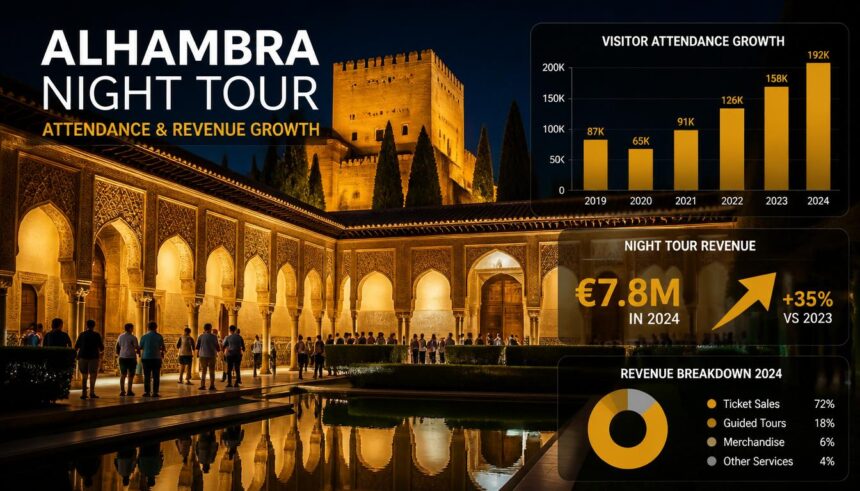
The Alhambra stands among the most remarkable historical monuments in Europe. Located in Granada, Spain, this UNESCO World Heritage Site attracts millions of visitors who come to admire its architectural beauty, Islamic heritage, intricate craftsmanship, and centuries of history. While daytime visits continue to dominate overall tourism numbers, night tours have emerged as one of the most exclusive and sought-after experiences available at the monument.
The growing popularity of evening visits has sparked interest in Alhambra Night Tour Attendance Revenue, a topic that combines visitor statistics, tourism economics, ticket demand, and heritage preservation. Night tours are not simply an additional attraction. They represent a carefully managed tourism product that generates substantial revenue while helping preserve one of the world’s most valuable cultural treasures.
Understanding how attendance affects revenue provides important insights into the sustainability of heritage tourism and the long-term preservation of historic landmarks.
Understanding Alhambra Night Tour Attendance Revenue
Alhambra Night Tour Attendance Revenue refers to the income generated through evening access programs offered at the Alhambra. Unlike standard daytime visits, these tours provide limited access to selected areas of the complex during nighttime hours under specially designed lighting conditions.
Visitors often describe the experience as entirely different from a daytime visit. The reduced crowds, illuminated architecture, peaceful atmosphere, and dramatic surroundings create a unique setting that appeals to travelers seeking a more immersive cultural experience.
Revenue generated from these tours helps fund operational costs, conservation projects, restoration efforts, visitor services, security, maintenance, and educational programs. As a result, night tours serve both tourism and preservation objectives simultaneously.
Why Night Tours Have Become Increasingly Popular
The popularity of Alhambra night tours has grown significantly over the past decade. Modern travelers increasingly seek memorable experiences rather than traditional sightseeing alone. Evening access offers exclusivity, atmosphere, and a deeper emotional connection to the site.
After sunset, architectural features appear dramatically different. Decorative arches, carved ceilings, reflective pools, and historic courtyards take on a new visual character when illuminated by carefully positioned lighting systems.
Many photographers, history enthusiasts, and cultural travelers specifically plan their trips around the opportunity to experience the Alhambra at night. Social media platforms have further amplified demand by showcasing stunning nighttime photographs that inspire future visitors.
The combination of exclusivity and visual appeal has transformed night tours into a premium tourism product capable of generating strong revenue despite limited attendance capacity.
The Relationship Between Attendance and Revenue
Attendance is the primary driver of Alhambra Night Tour Attendance Revenue. Every available ticket contributes directly to total earnings.
However, unlike many tourist attractions that maximize revenue by increasing visitor numbers, the Alhambra follows a controlled-capacity model. Preservation concerns require strict attendance limits to protect fragile architectural features and ensure a high-quality visitor experience.
Because capacity remains limited, revenue growth often depends on factors such as:
- Ticket pricing strategies
- Demand levels
- Seasonal tourism patterns
- Visitor demographics
- Booking behavior
- Premium visitor experiences
This approach creates a balance between financial sustainability and heritage conservation.
How Ticket Pricing Influences Revenue
Night tours typically command higher prices than many standard cultural attractions because they offer an exclusive experience.
Visitors are not merely purchasing entry to a monument. They are paying for:
- Limited-capacity access
- Enhanced atmosphere
- Reduced crowd levels
- Unique photography opportunities
- Specialized visitor experiences
- Premium cultural tourism
Higher perceived value allows administrators to maintain healthy revenue levels without significantly increasing visitor numbers.
This pricing model supports conservation goals while helping ensure long-term financial sustainability.
Seasonal Trends Affecting Attendance
Attendance levels fluctuate throughout the year, influencing overall revenue performance.
Spring Season
Spring remains one of the strongest periods for visitor demand. Comfortable weather conditions attract international travelers, making evening tours especially appealing.
Many tourists combine daytime exploration with night visits, increasing ticket demand during this period.
Summer Season
Summer typically delivers the highest overall tourist volume. However, daytime temperatures in Granada can become extremely warm.
As a result, many travelers prefer evening activities, making night tours particularly attractive during peak tourism months.
Autumn Season
Autumn is another highly successful period. Pleasant temperatures and reduced crowd levels create ideal conditions for cultural tourism.
Many experienced travelers intentionally visit during autumn to avoid summer congestion while still enjoying favorable weather.
Winter Season
Winter generally experiences lower attendance levels. Nevertheless, history enthusiasts, photographers, and international visitors continue to generate consistent demand throughout the season.
The unique atmosphere of illuminated historical architecture helps maintain visitor interest even during quieter months.
Advance Bookings and Revenue Stability
One of the most important contributors to revenue stability is advance ticket purchasing.
Many travelers reserve tickets weeks or months before arriving in Granada. This behavior offers several advantages:
- Predictable attendance forecasts
- Improved staffing management
- Better visitor flow planning
- Reduced last-minute uncertainty
- Earlier revenue collection
Advance reservations also create scarcity, encouraging prospective visitors to purchase tickets quickly before availability disappears.
Economic Impact Beyond Ticket Sales
The benefits of Alhambra Night Tour Attendance Revenue extend far beyond the monument itself.
Every visitor participating in a night tour contributes to Granada’s wider tourism economy through additional spending on:
- Hotels
- Restaurants
- Cafés
- Transportation
- Souvenir shops
- Guided experiences
- Cultural events
Many tourists extend their stay specifically to attend a night tour. This additional spending generates economic activity across multiple sectors and supports local businesses throughout the city.
The result is a significant economic multiplier effect that benefits the broader regional economy.
Supporting Heritage Preservation
Perhaps the most important role of night tour revenue is supporting preservation efforts.
Historic sites require continuous investment to maintain their structural integrity and cultural significance. Conservation projects often involve:
- Restoration of architectural details
- Environmental monitoring
- Structural maintenance
- Visitor management systems
- Security operations
- Research initiatives
Without sustainable revenue streams, preserving historic landmarks becomes increasingly difficult.
Night tours provide a practical solution by generating income while maintaining controlled visitor numbers.
Technology’s Role in Revenue Growth
Digital technology has transformed the visitor booking process.
Modern online reservation systems allow tourists from around the world to purchase tickets quickly and conveniently.
These systems provide valuable insights into:
- Booking patterns
- Visitor preferences
- Seasonal demand
- Revenue forecasting
- Market trends
Managers can use this information to optimize operations and improve visitor experiences while maximizing available revenue opportunities.
Mobile booking platforms have further simplified access, contributing to higher conversion rates and stronger overall demand.
Challenges Facing Future Revenue Growth
Despite strong performance, several challenges can affect future revenue generation.
Capacity Restrictions
Preservation requirements limit visitor numbers. While this protects the monument, it also restricts revenue expansion through attendance growth.
Economic Conditions
Global economic uncertainty can influence travel spending and reduce demand for premium tourism experiences.
Weather Disruptions
Adverse weather occasionally impacts visitor attendance and satisfaction.
Tourism Competition
Destinations across Europe continue developing innovative cultural experiences, increasing competition for international travelers.
Maintaining the uniqueness of Alhambra night tours remains essential for sustaining demand.
Future Opportunities for Expansion
The future outlook for Alhambra Night Tour Attendance Revenue remains highly positive.
Several opportunities could support continued growth:
- Enhanced digital visitor experiences
- Interactive historical storytelling
- Premium guided tours
- Cultural event partnerships
- Educational tourism programs
- Photography-focused experiences
- Exclusive heritage packages
As travelers increasingly prioritize authentic cultural experiences, demand for premium heritage tourism is expected to remain strong.
The Alhambra’s unique combination of history, architecture, and atmosphere positions it exceptionally well for long-term success.
Why Visitors Continue Choosing Night Tours
The enduring appeal of Alhambra night tours lies in their ability to transform a historic monument into a memorable experience.
Visitors frequently report that evening visits feel more intimate, immersive, and emotionally engaging than daytime exploration.
The illuminated palaces, tranquil courtyards, and peaceful surroundings create a sense of connection to history that is difficult to replicate elsewhere.
For many travelers, the night tour becomes the highlight of their entire visit to Granada.
Conclusion
Alhambra Night Tour Attendance Revenue represents a successful model of sustainable cultural tourism. By combining controlled visitor numbers, premium experiences, strategic pricing, and strong international demand, the Alhambra generates valuable revenue while preserving one of Spain’s most important historical landmarks.
The impact extends beyond ticket sales, supporting heritage conservation, local businesses, tourism employment, and Granada’s wider economy. As interest in authentic cultural experiences continues to grow worldwide, Alhambra night tours are expected to remain a major contributor to both tourism development and long-term preservation efforts.
FAQs
What is Alhambra Night Tour Attendance Revenue?
It refers to the income generated through evening tour tickets and related visitor activities at the Alhambra.
Why are night tours popular among tourists?
Night tours offer exclusive access, smaller crowds, unique lighting effects, and a more immersive cultural experience.
How do night tours support preservation?
Revenue helps fund restoration projects, maintenance programs, conservation initiatives, security operations, and visitor services.
When is demand highest for night tours?
Demand is generally strongest during spring, summer, and autumn when tourism activity in Granada reaches peak levels.
Do night tours benefit Granada’s economy?
Yes. Visitors spend money on accommodation, dining, transportation, shopping, and other tourism-related services, creating broader economic benefits.