




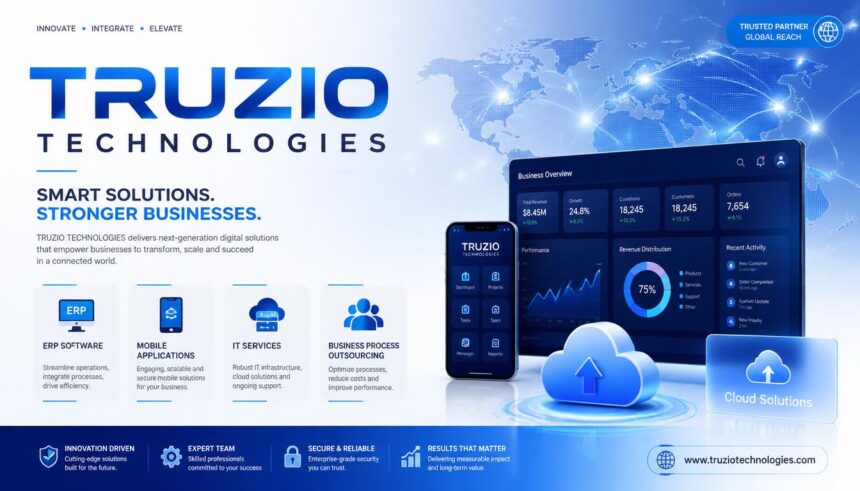
In today’s fast-moving digital world, businesses are changing the way they operate. Everything is becoming faster, smarter, and more connected than ever before. Companies are no longer relying on old traditional systems because they simply cannot keep up with modern demands and customer expectations.
This is where concepts like Truzio start to become important. It represents a modern approach to business systems where automation, smart tools, and digital workflows come together to create better efficiency. Instead of working harder, businesses are now focusing on working smarter, and that shift is changing everything.
Understanding Truzio in a Modern Business World
Truzio can be understood as a concept that reflects how modern businesses are evolving through technology. It is not just about software or tools, but about a complete mindset shift in how companies manage operations, data, and communication. Businesses today want systems that reduce effort and improve output at the same time, and this idea fits perfectly into that demand.
In traditional setups, companies often relied on manual processes that were slow and error-prone. Employees had to manage multiple tools, update records separately, and spend a lot of time on repetitive tasks. Over time, this created inefficiencies and slowed down growth. Truzio represents the opposite of that approach, where systems are designed to be connected and intelligent.
Another important part of understanding Truzio is recognizing how businesses are now prioritizing integration. Instead of using different platforms for every function, companies want a single environment where everything works together smoothly. This makes operations more stable and easier to manage, especially when businesses start growing and handling larger workloads.
At its core, Truzio represents simplicity in complexity. It helps businesses take complicated workflows and turn them into smooth, automated processes that save time and increase productivity.
Why Businesses Are Moving Toward Smart Digital Systems
Modern businesses are under constant pressure to perform better while reducing costs. Customers expect faster responses, personalized services, and smooth digital experiences. These expectations have pushed companies to rethink how they operate and invest more in digital systems.
One of the biggest reasons behind this shift is competition. In almost every industry, businesses are competing not just locally but globally. A company that uses outdated systems quickly falls behind because it cannot match the speed and efficiency of competitors who are using modern technology.
Another important reason is scalability. Businesses do not stay the same size forever. As they grow, their operations become more complex. Digital systems help companies scale without breaking their structure. Instead of adding more manual work, businesses can rely on automation and cloud-based systems to handle increased demand.
This shift is also driven by customer expectations. People now interact with businesses through websites, apps, and digital platforms. If the experience is slow or confusing, customers quickly move to competitors. Smart systems help businesses provide a smoother and more reliable experience, which directly impacts customer satisfaction.
How Truzio-Style Systems Improve Business Efficiency
One of the most important benefits of Truzio-like systems is improved efficiency. Businesses often waste a lot of time on repetitive tasks that do not directly contribute to growth. These tasks include updating records, managing data, and handling routine communication. When these processes are automated, employees can focus on more meaningful work.
Efficiency also improves when everything is connected in one system. In many organizations, different departments use different tools, which creates confusion and delays. When systems are integrated, information flows easily between teams, making decision-making faster and more accurate.
Another major improvement comes in workflow management. Instead of handling tasks manually, businesses can create structured workflows that run automatically in the background. This reduces human error and ensures consistency in operations. Over time, this leads to smoother business performance and better results.
In real-world situations, companies that adopt such systems often notice that their teams become more productive without increasing workload. This is because employees spend less time on repetitive work and more time on tasks that actually require creativity and strategy.
Role of Automation in Modern Business Growth
Automation is one of the strongest forces behind modern business transformation. It allows companies to complete tasks faster, with fewer errors, and at a lower cost. This is especially important in competitive markets where speed and accuracy matter a lot.
In customer service, automation is widely used through chat systems that respond instantly to customer questions. This ensures that users get quick answers without waiting for human agents. At the same time, it reduces pressure on support teams, allowing them to focus on complex issues.
In finance and administration, automation helps in managing invoices, payments, and reports. These processes, which once took hours or even days, can now be completed in minutes. This improves financial accuracy and reduces operational delays.
Marketing is another area where automation plays a big role. Businesses can schedule campaigns, analyze performance, and track customer engagement automatically. This helps companies understand what is working and what needs improvement without manual effort.
Overall, automation is not just about saving time. It is about improving the quality of work and making business operations more reliable and scalable.
Cloud Technology and Its Impact on Business Systems
Cloud technology has completely changed the way businesses store and manage data. Instead of relying on physical servers and local storage systems, companies now use cloud-based platforms that offer flexibility and security.
One of the biggest advantages of cloud systems is accessibility. Employees can access important data from anywhere, which makes remote work and flexible working environments possible. This has become a normal part of modern business life.
Cloud systems also improve collaboration. Teams working in different locations can access the same files and update them in real time. This reduces confusion and ensures that everyone is working with the latest information.
Another important benefit is cost efficiency. Businesses do not need to invest heavily in infrastructure. Instead, they can use cloud services based on their needs. This is especially useful for small businesses that want to grow without large initial investments.
Artificial Intelligence and Smarter Decision Making
Artificial intelligence is becoming a powerful tool in business decision-making. It helps companies analyze large amounts of data and identify patterns that are difficult for humans to detect. This leads to smarter and more informed decisions.
Businesses use AI to understand customer behavior, predict market trends, and improve service quality. For example, online platforms use AI to recommend products based on user preferences. This improves customer experience and increases engagement.
AI also helps in reducing risks. By analyzing data trends, businesses can predict potential problems before they happen. This allows companies to take preventive actions and avoid losses.
As AI continues to improve, it is expected to become a core part of business systems. It will not only support decision-making but also handle complex tasks with minimal human involvement.
How Truzio Supports Business Productivity and Growth
Truzio-style systems focus heavily on productivity. Many businesses struggle because employees spend too much time switching between tools and managing repetitive tasks. This slows down progress and creates unnecessary complexity.
When systems are unified, everything becomes easier to manage. Employees can access information, communicate with teams, and complete tasks from one platform. This reduces confusion and increases focus.
Another important factor is time management. When tasks are automated, employees get more time to focus on innovation and strategy. This leads to better ideas, improved performance, and stronger business growth.
Over time, businesses that use such systems often see a noticeable improvement in both efficiency and output quality. This is because workflows become more structured and less dependent on manual effort.
Importance of Data in Modern Business Growth
Data has become one of the most valuable assets for any modern business. Every interaction, purchase, and customer activity generates useful information that can be analyzed for better decision-making.
Companies use this data to understand what customers want, how markets are changing, and where opportunities exist. Instead of guessing, businesses rely on real insights to make decisions.
This helps improve accuracy and reduce risks in business planning. Data also supports personalization, which allows companies to offer better experiences to customers.
Businesses that use data effectively are more likely to grow faster because they understand their audience better than competitors.
Cybersecurity and Trust in Digital Business Systems
As businesses move toward digital systems, security becomes extremely important. Every company deals with sensitive information that must be protected from cyber threats.
Modern systems use encryption, monitoring tools, and access controls to protect data. These security measures help prevent unauthorized access and ensure safe operations.
Trust is also a key factor. Customers want to feel safe when sharing their information. Businesses that focus on security build stronger relationships with their customers.
Without proper security, even the best systems can fail. That is why cybersecurity is now a core part of every digital strategy.
Future of Smart Business Systems
The future of business systems is moving toward more automation, intelligence, and integration. Companies will rely more on systems that can handle tasks automatically and provide real-time insights.
Artificial intelligence, cloud technology, and automation will continue to evolve and become more powerful. Businesses will depend on these technologies to stay competitive and efficient.
Truzio represents this direction of change, where businesses become more connected, faster, and smarter. Organizations that adopt these systems early will have a clear advantage in the market.
Conclusion
Truzio represents a shift toward smarter and more efficient business systems powered by automation, cloud technology, and artificial intelligence. It reflects how modern companies are moving away from traditional methods and adopting digital solutions to improve productivity and growth. Businesses that embrace this change are better positioned to succeed in a competitive and fast-moving digital world.
FAQs
What is Truzio in simple words?
Truzio is a modern business concept linked with smart digital systems that help companies improve efficiency, automate tasks, and manage work in a more organized way. It focuses on making business operations faster and easier using technology.
How does Truzio help businesses grow?
Truzio helps businesses grow by reducing manual work and improving productivity through automation and smart workflows. It allows teams to focus on important tasks instead of wasting time on repetitive processes.
Is Truzio a software or a concept?
Truzio is generally explained as a concept related to smart business systems and digital transformation. It represents how modern tools and technologies work together to improve business performance.
Why is automation important in systems like Truzio?
Automation is important because it saves time, reduces errors, and increases efficiency. It helps businesses complete tasks faster and ensures consistent performance without manual effort.
Who can benefit from Truzio-based systems?
Startups, small businesses, and large enterprises can all benefit from Truzio-style systems. Any organization that wants to improve efficiency, reduce workload, and scale operations can use such digital approaches.